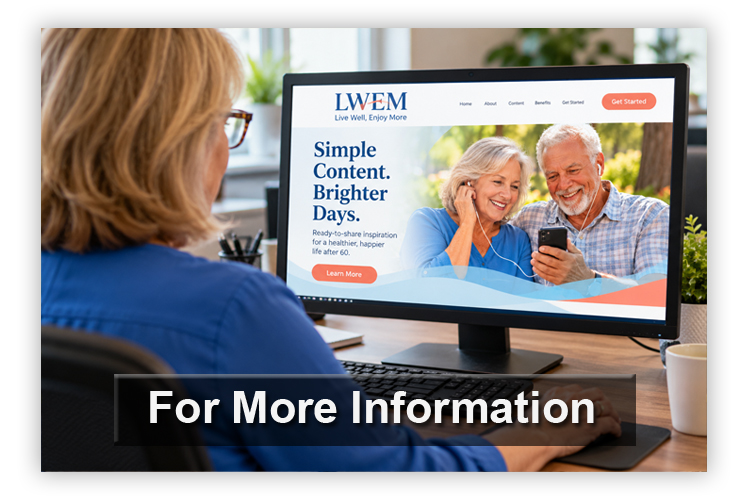
12 Email Marketing Tips
1. Make the Email About the Recipient, Not Your Business
People are more likely to read an email when it offers something useful, interesting, entertaining, or encouraging.
Share helpful information.
Offer a simple tip.
Include an inspirational thought.
Make someone smile.
Occasionally introduce a service or special offer.
Build the relationship before asking for business.
2. Insert Your Business Information
Make every email an opportunity to reinforce your business identity.
Encourage providers to include:
Business name and logo.
Website address.
Telephone number.
Email address.
A brief description of their services.
A link to schedule an appointment or request information.
Place this information in a consistent location, preferably at the bottom of the email.
The recipient should never have to search for who sent the message or how to contact them.
3. Follow the 80/20 Rule
A good guideline is to make approximately 80% of your emails informational, entertaining, inspirational, or helpful, and reserve 20% for promotional messages.
For example:
The idea is simple: Don’t make every email a sales pitch. Give people reasons to look forward to hearing from you.
4. Make Your Subject Line Interesting
The subject line determines whether someone opens your email.
Instead of:
Monthly Newsletter
Company Update
Our Latest Services
Try:
A Little Something to Brighten Your Day
Have You Tried Something New Lately?
Three Simple Ways to Make Life Easier
Something Worth Sharing With a Friend
Keep it conversational and avoid misleading headlines.
5. Personalize Your Messages
Whenever possible, address recipients by their first name.
You can also personalize messages based on their interests, previous purchases, or services they receive.
A personal message feels more like communication from someone they know than a mass advertisement.
6. Keep Emails Short and Easy to Read
Most people don’t want to read a lengthy business newsletter.
Use short paragraphs.
Break information into sections.
Use an appropriate image.
Highlight important information.
Include one clear link or action.
Make the message easy to understand at a glance, especially on a smartphone.
7. Use Images to Capture Attention
A good image can communicate an idea faster than several paragraphs.
Consider:
Photographs of people enjoying activities.
Seasonal images.
Simple instructional graphics.
Inspirational messages.
Images introducing a service or special offer.
Whenever appropriate, make the image clickable and link it to a video, article, or page on your website.
8. Be Consistent, Not Overwhelming
Email marketing is about maintaining a relationship.
Sending something useful on a regular basis helps people remember your business.
However, sending too many emails can cause people to lose interest or unsubscribe.
Choose a schedule you can maintain and make the content worthwhile.
9. Don’t Get Hung Up on Days and Times
There is plenty of advice about sending emails on Tuesday mornings, Thursday afternoons, or at specific hours.
But there is no universal best time.
Your audience, the nature of your message, and the relationship you have with your customers are more important than following someone else’s recommended schedule.
For example:
A weekly message is easier to anticipate than random emails.
A useful message can be opened when the recipient has time.
Consistency is more important than trying to find the perfect hour.
Pay attention to your own open rates and responses to determine what works for your audience.
10. Include a Reason to Take Action
Not every email needs a sales pitch, but every promotional email should have a clear next step.
Examples:
Call us to schedule an appointment.
Visit our website to learn more.
Ask about our current services.
Share this information with someone who might find it helpful.
Don’t give recipients five different things to do. Keep the next step simple.
11. Encourage Sharing and Referrals
Your existing customers can become some of your best sources of new business.
Occasionally encourage recipients to share something useful with a friend or family member.
For example:
“If you know someone who might enjoy this information, feel free to pass it along!”
This is especially useful for businesses serving seniors, where family members and caregivers may also influence purchasing decisions.
12. Build Trust Before You Sell
People do business with companies they know, recognize, and trust.
Use your emails to demonstrate that you understand the people you serve.
Share:
Customer success stories (with permission).
Helpful advice.
Answers to common questions.
Introductions to your staff.
Community involvement.
Information that demonstrates your experience.
Over time, these small communications help establish credibility.
Our Goal
Samples

Sign Up